Systems Designed for Industrial Fire Hazards
Dry Chemical Fire Suppression Systems in Poughkeepsie for facilities with paint spray booths, powder coating operations, and flammable liquid processing
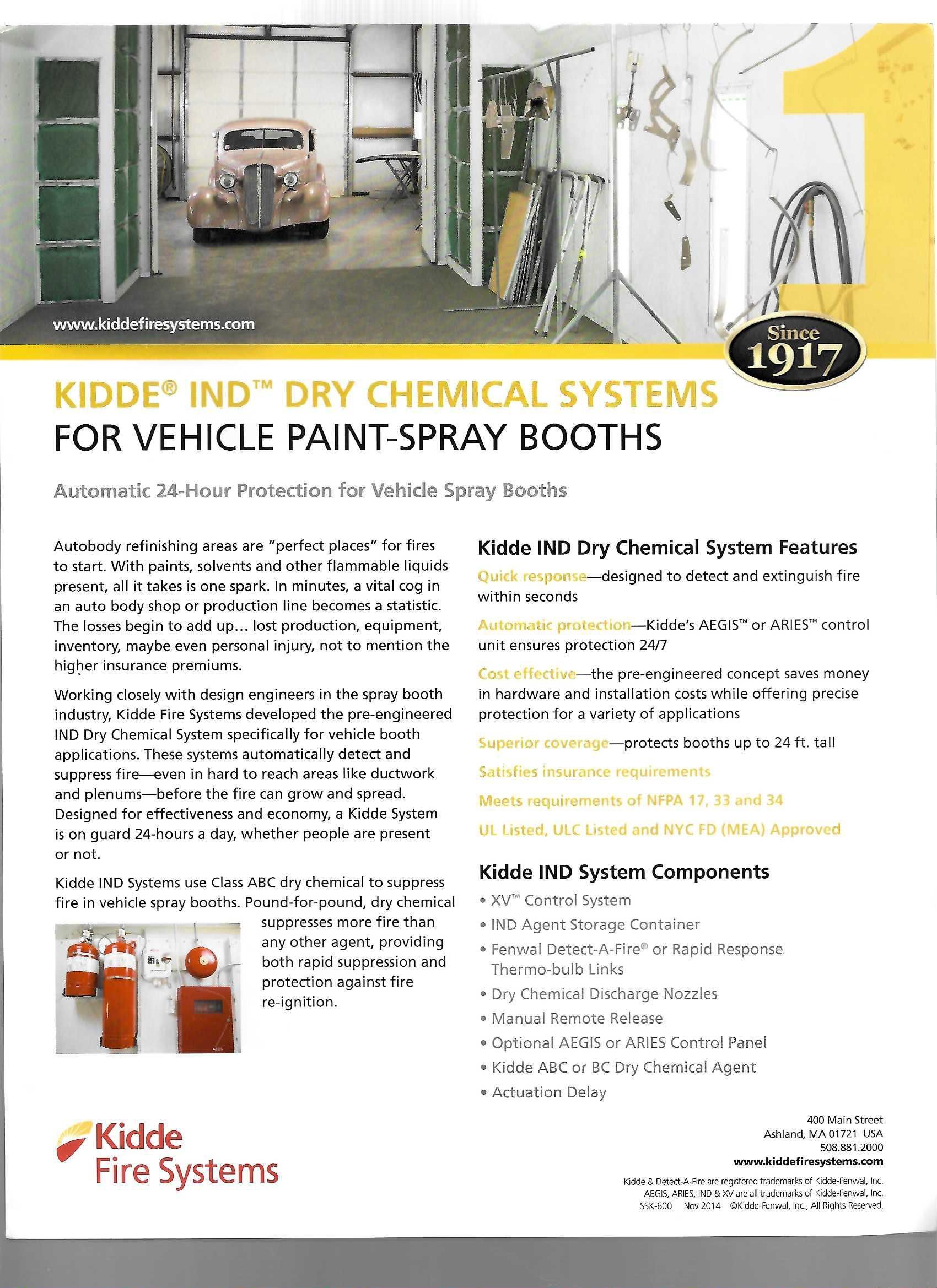
Industrial environments using flammable liquids, solvents, or fine combustible powders face fire risks that standard sprinkler systems cannot address effectively, requiring dry chemical suppression systems that discharge rapidly to smother flames and stop combustion before fire spreads to adjacent equipment or inventory. These systems protect paint spray booths where overspray creates explosive vapor concentrations, powder coating lines where electrostatically charged particles ignite easily, vehicle finishing facilities applying flammable coatings, and manufacturing processes involving solvents or oils that burn intensely once ignited.
Imperial Fire & Safety, Inc. designs, installs, inspects, and maintains dry chemical systems throughout Poughkeepsie, evaluating specific hazards before determining agent type, nozzle placement, and detection methods that trigger discharge when heat or flame reaches critical thresholds.
Dry chemical agents work by interrupting the chemical reaction of fire rather than cooling or smothering alone, allowing smaller quantities of agent to suppress larger fires compared to water-based systems. Detection components monitor conditions inside hazard zones continuously, activating discharge when temperature spikes or when flame detectors sense combustion, and systems can integrate with equipment shutoffs that stop production processes and close dampers to contain agent within the protected area. Imperial services facilities across industrial sectors, coordinating with equipment manufacturers to ensure suppression integrates with production workflows without creating false activations during normal high-temperature operations.
Request a hazard assessment to determine whether your industrial processes require dry chemical suppression and what coverage area needs protection.
What Proper Industrial Suppression Systems Include
System design begins with evaluating the specific hazard, including the type of flammable material, the enclosure volume, ventilation rates, and potential ignition sources, which determines the required agent quantity and discharge rate. Nozzles position to provide even agent distribution across the entire hazard zone, preventing gaps where fire could continue burning, and detection components locate where they respond quickly to fire conditions without triggering during normal process heat. Scheduled maintenance includes inspecting agent storage cylinders for pressure loss, checking nozzles for blockages or mechanical damage, testing detection circuits, and verifying manual pull stations activate properly.
After installation, you see clearly marked manual pull stations allowing operators to trigger discharge during emergencies, nozzles positioned to cover the entire hazard area without obstructing production workflows, and detection components that respond to fire conditions without false alarms during routine operations. Protected facilities gain operational continuity since rapid suppression limits fire damage to a small area rather than allowing flames to destroy entire production lines, equipment, and inventory. Systems discharged during fire events require immediate recharging, which includes refilling agent cylinders, replacing discharge nozzle seals, resetting detection components, and testing all mechanical and electrical functions before returning the system to service.
Compliance involves meeting applicable NFPA standards and manufacturer specifications, with inspection frequency determined by the specific system type and insurance requirements. New construction and facility expansions require coordinating with contractors and architects during design phases to integrate suppression piping, nozzles, and detection components before walls and ceilings close, ensuring the system installs efficiently without requiring costly rework after construction completes.
Questions Before Starting Your Project
Industrial facility managers usually ask how dry chemical systems differ from sprinklers and whether existing processes need modification to accommodate suppression equipment.
What fire hazards require dry chemical suppression rather than sprinklers?
Flammable liquid fires, Class B hazards involving solvents or oils, environments where water would spread burning liquids or damage sensitive equipment, and enclosed spaces like spray booths where rapid agent discharge stops fire before it reaches explosive concentrations all benefit from dry chemical systems.
How does detection trigger system discharge?
Heat detectors activate when temperature reaches a preset threshold, flame detectors respond to ultraviolet or infrared radiation from combustion, and manual pull stations allow operators to trigger discharge immediately when they observe fire conditions before automatic detection activates.
What happens after the system discharges?
Agent blankets the hazard area, suppressing flames within seconds, while equipment shutoffs stop production processes and close ventilation dampers to keep agent concentrated in the protected zone, and facilities must recharge the system before resuming operations.
Why evaluate hazards before designing the system?
Agent type, nozzle quantity, discharge rate, and detection sensitivity all depend on the specific flammable material, enclosure geometry, and process temperatures involved, which vary significantly between powder coating booths, solvent storage areas, and vehicle paint lines.
How often do these systems need inspection?
Most dry chemical systems require annual inspections to verify agent cylinder pressure, nozzle condition, detection functionality, and manual activation components remain operational, with more frequent checks needed in high-vibration or corrosive environments common in Poughkeepsie manufacturing facilities.
Imperial Fire & Safety, Inc. works with industrial facility managers to protect specialized processes and high-value equipment from fire damage, designing systems that integrate with existing production workflows. Contact Imperial to discuss suppression requirements for your specific industrial hazards.