FAQ’s - Imperial Fire & Safety, Inc

General Fire Protection Questions
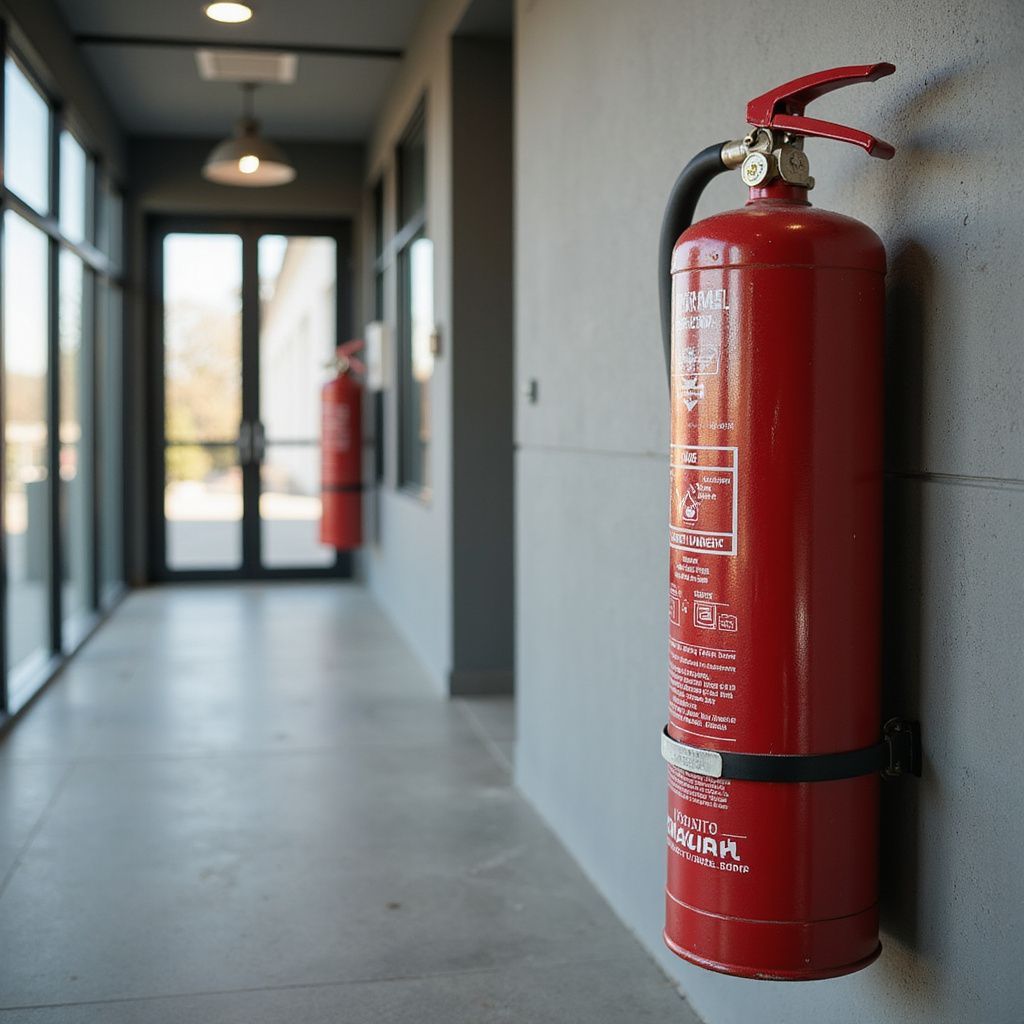
Red fire extinguisher mounted on a gray wall in a hallway with another in the distance.

What does NFPA mean and why does it matter?

NFPA stands for the National Fire Protection Association. It publishes consensus standards for fire protection, life safety, and related systems. Compliance with NFPA standards is often required by local codes, inspectors, and insurers.
Man in safety vest and hard hat reviewing paperwork in a commercial kitchen.

How do I know what fire protection my building needs?

Fire protection requirements depend on occupancy, fire load, occupants, layout, and hazards. A professional site survey assesses risks and recommends extinguishers, suppression, and ventilation.

Portable Fire Extinguisher Questions

How many extinguishers do I need and where should they be placed?
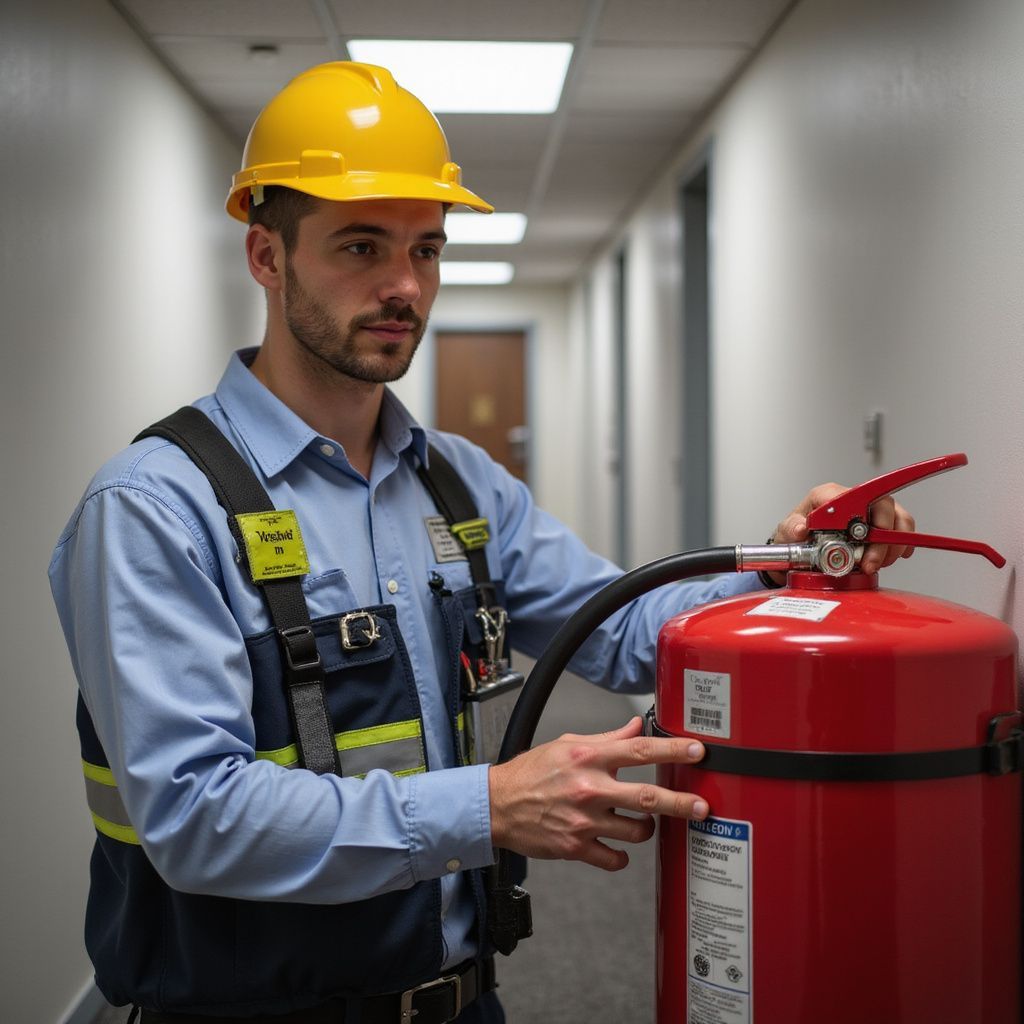
NFPA 10 provides criteria based on travel distance, extinguisher rating, and occupancy. As a general rule, extinguishers should be readily accessible within a short travel distance from any point in the occupancy, and placed near likely ignition sources such as kitchens and mechanical rooms.
Person in hard hat and safety vest checks a red fire extinguisher in an office hallway.

Who is responsible for monthly checks?
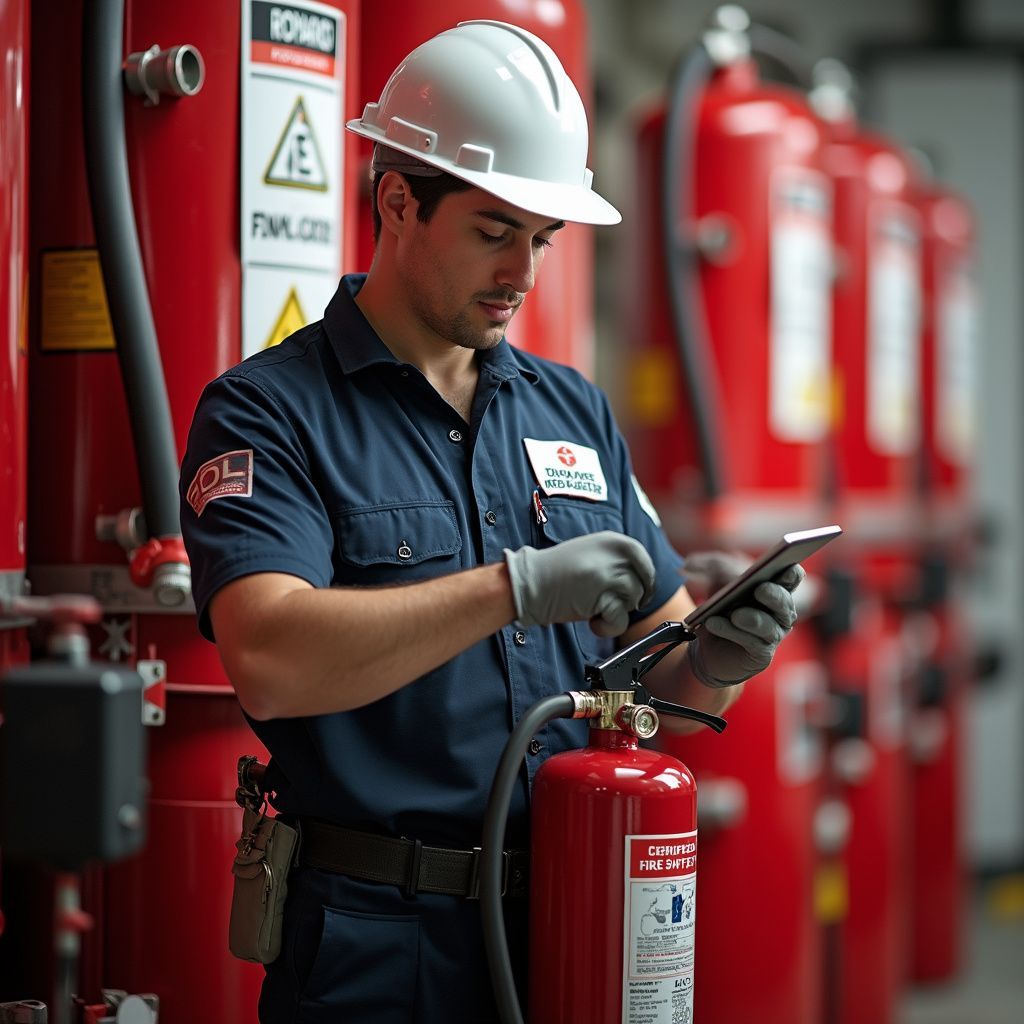
On-site staff typically conduct monthly visual checks to confirm extinguishers are present, visible, and appear serviceable. Annual professional inspections are performed by certified technicians.
Technician in blue uniform and hard hat inspecting a fire extinguisher, using a tablet in an industrial setting.

What is hydrostatic testing and how often is it required?
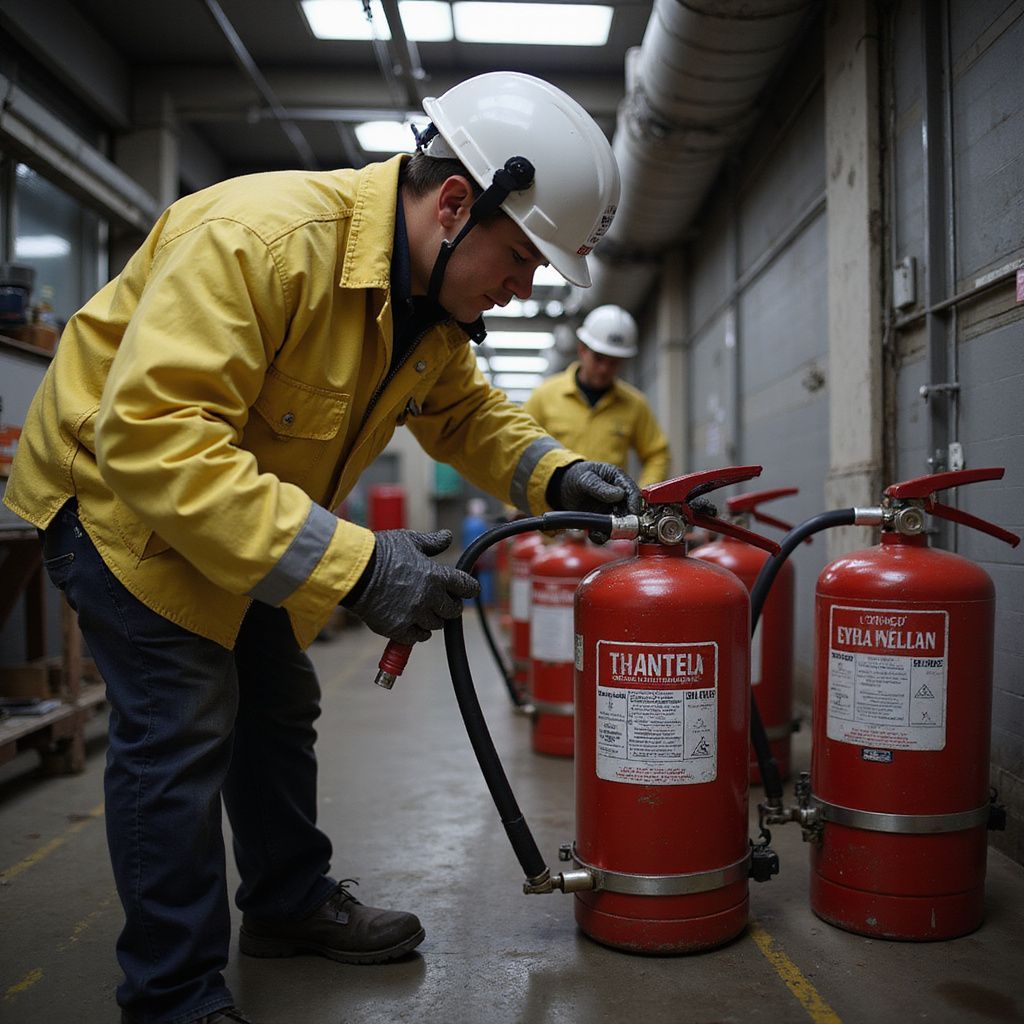
Hydrostatic testing checks the integrity of the extinguisher cylinder under pressure. Intervals depend on the type of extinguisher (commonly 5 or 12 years) and manufacturer guidelines. Our technicians manage scheduling and testing.
Worker in yellow jacket inspects red fire extinguishers in a factory. Another worker in background.

Fire Suppression & Kitchen Questions

01

Difference Between Pre-Engineered

Pre-engineered systems are factory-designed for common hazards such as commercial kitchen appliances and offer cost-effective solutions for standard applications. Engineered systems are custom-designed to address unique hazards, larger spaces, or complex processes requiring specific discharge characteristics.

02

Kitchen Hood Cleaning Frequency

NFPA 96 establishes cleaning schedules based on cooking volume and grease production. High-volume kitchens may require daily or weekly cleaning, while lower-volume operations might need monthly or quarterly service. We provide a recommended cleaning schedule tailored to your operations.

03

Kitchen Suppression System Discharge Process

Wet chemical systems release suppressant to cool and saponify grease, effectively extinguishing fires. After discharge, servicing is necessary, including replacement of expended agent containers and inspection of piping and nozzles before the system can be returned to service.

Inspection and Compliance Questions


Documentation for Code Compliance

After every inspection or service, detailed reports and tagging are issued consistent with NFPA and local requirements to support audits and insurance needs.

Coordination with Fire Marshals

We collaborate with authorities having jurisdiction, submit required permit documents, and prepare systems to facilitate final inspections.

Service and Maintenance Questions

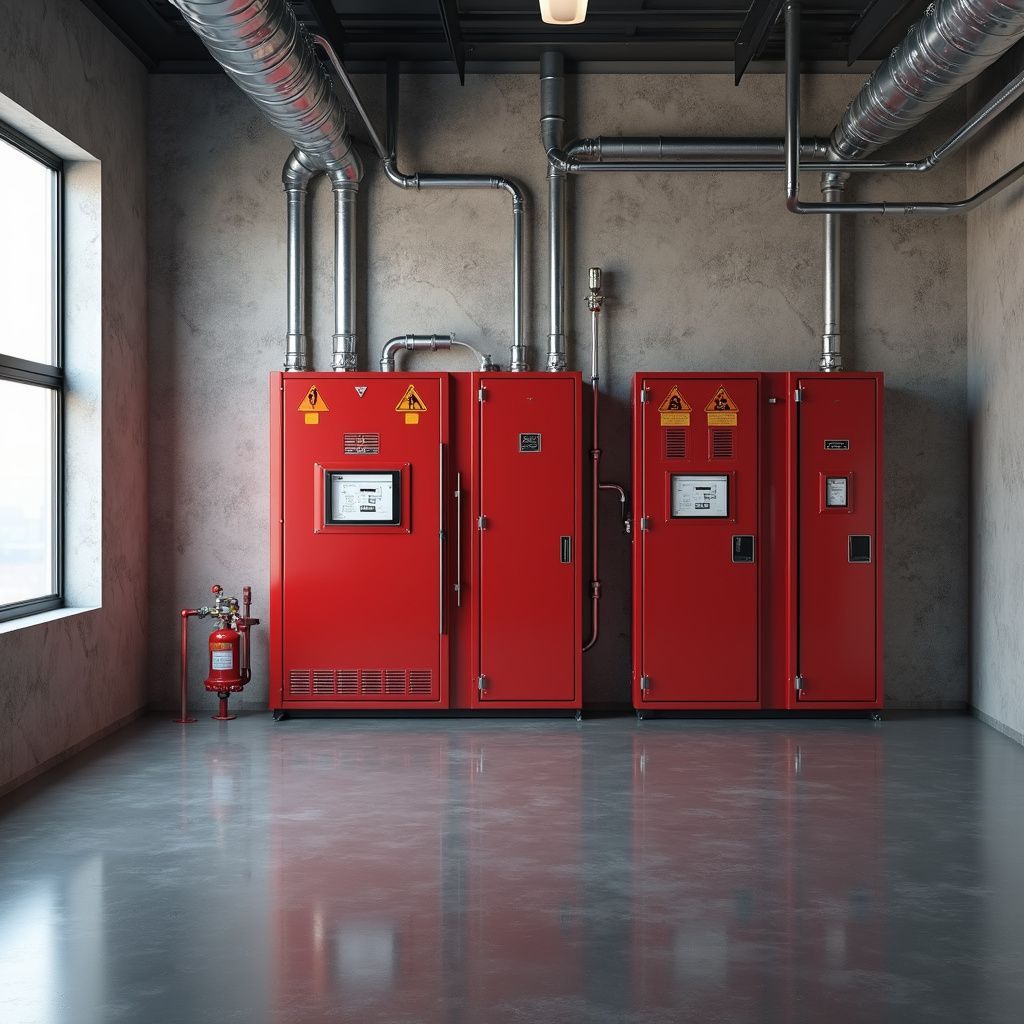
Red electrical cabinets with warning signs and a fire extinguisher in an industrial room.

Service Intervals

Intervals vary by system type and manufacturer. Many systems require semi-annual or annual checks for detection devices, actuation mechanisms, and agent storage. We provide an individualized maintenance schedule during commissioning.
Worker in blue uniform and hard hat inspecting red pipes with a wrench. Industrial setting.

Service Contracts

We provide flexible service agreements covering routine inspections, preventive maintenance, priority response, and record keeping.

Product and Purchasing Questions


Fire Extinguisher Types

We sell dry chemical (ABC), water-based, CO2, clean agent, Class K, and specialty extinguishers to suit different hazards and environments.

Replacement Parts and Accessories

We stock common replacement parts, cabinets, mounting hardware, and accessories needed to keep equipment functional and code-compliant.

Emergency Response Questions

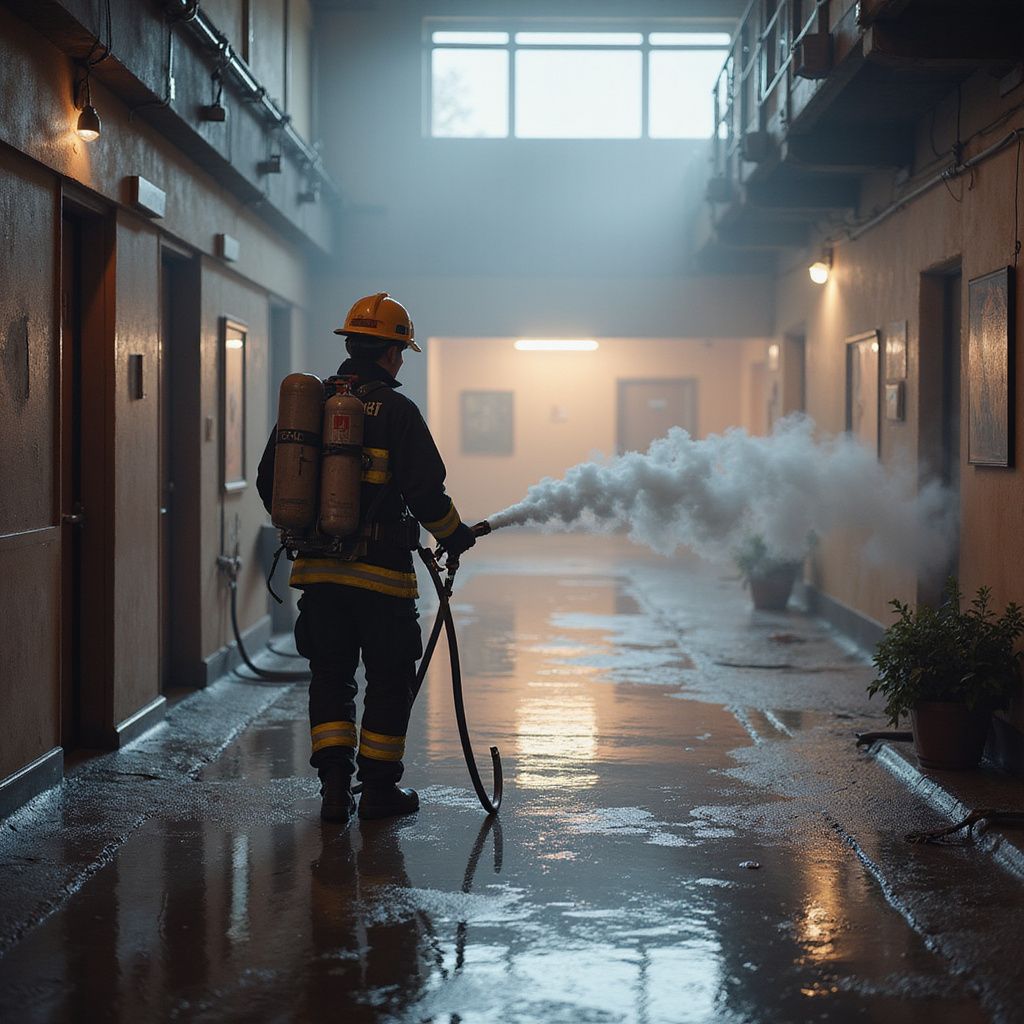
Firefighter sprays water in a smoky hallway, reflecting on wet floor.

Response Time for Discharged Systems

As a local partner, we prioritize emergency calls and typically dispatch technicians quickly to restore protection. Call (845) 473-5852 for urgent service.
Long, industrial hallway with closed doors, illuminated by bright orange light at the end.

Actions After System Discharge

Evacuate or secure the area per your emergency plan, notify building management and authorities if needed, and contact us to assess the system and begin recovery work. Avoid reoccupying spaces where hazards remain.

Let us help you create a safer, more efficient kitchen that meets code and protects your business.

Contact Us — FAQs

Have questions about kitchen exhaust systems or need more information? Reach out to our team, and we’ll provide the answers and guidance you need to ensure safe, efficient, and code-compliant kitchen ventilation.